Reactive Training with XCO: Devices, Exercises, Evidence

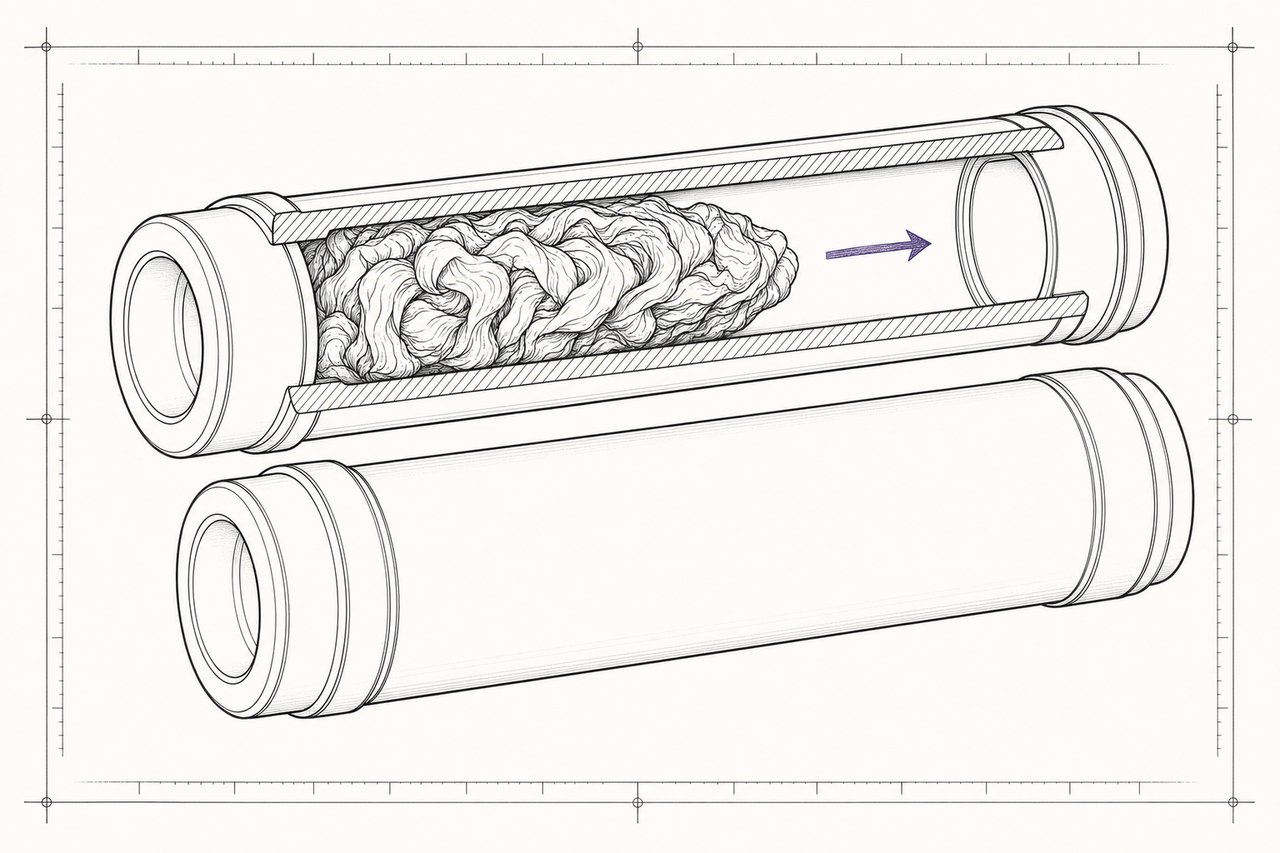
Reactive dumbbells look like short tubes and weigh almost nothing. The stimulus does not come from the weight but from a loose mass inside that strikes the end of the barrel at every change of direction. Reactive training therefore works with an impulse whose timing the user generates. What follows explains the principle, places the usual exercises, and separates what is evidenced from what is not.
The principle
With a conventional dumbbell the load is constant and the muscle works against a steady force. Reactive training inverts that: the load is small but arrives as a shock, precisely when the movement reverses. The body has to anticipate and stabilise against the impact, which brings deeper stabilising muscle into play.
The effect depends entirely on movement quality. Guided slowly and softly, there is no impact and therefore no stimulus. That is the essential difference from weights, which still represent a load even when the execution is poor.
Where XCO came from
The XCO is an aluminium tube of roughly 30 centimetres with a moving mass inside. It was developed in the environment of the pole disciplines as an addition for upper-body work, which is why it has always appeared on nordic fitness programmes. The grip sits centrally, so the mass has the same travel in both directions.
Other devices share the same working principle under different names. They differ in barrel length, mass proportion and grip design, not in the underlying mechanics. One device is enough: running several systems in parallel adds purchases rather than stimulus.
Exercises and what the evidence supports
The standard exercises are few: the arm drive from standing, the lateral swing at shoulder height, the rotation in front of the body and the overhead movement. All four depend on the reversal being set sharply enough to be audible. The sound of the impact is the simplest feedback on whether an exercise is doing its job, and it doubles as the stopping criterion.
On the evidence, restraint is warranted. The available studies are small, often without a control group and rarely replicated independently, and they mostly measure muscle activation rather than outcomes after weeks. The honest summary is narrow: activation of stabilising shoulder and trunk muscle is higher than with an equally heavy rigid dumbbell. Claims about strength gain, posture or energy expenditure over months do not follow from that.
Frequently asked questions
What is the physical principle?
A loose mass inside the tube, usually granulate or a metal slug, is accelerated at every change of direction and strikes the end of the barrel. That impact sends a short impulse through the hand into the arm. Because its timing depends on your own movement, the muscles have to anticipate it rather than simply hold a constant weight.
How heavy are they?
Common models weigh between 500 and 800 grams each, of which roughly 100 to 150 grams is the moving mass. The absolute load is therefore small. The demand comes from the impulse and the repetition rate, not from the weight.
Does this replace strength training?
No. There is simply not enough load for hypertrophy or maximal strength. The stimulus lies in rapid alternation between tension and release, and in trunk stabilisation. As a supplement to endurance or strength work it makes sense; as a replacement it does not.
Can I use them while walking?
Yes, and that was the original purpose. The devices are carried in the rhythm of the arm swing. Combining them with poles is not possible, because both hands are occupied.
Who should avoid them?
Anyone with acute shoulder, elbow or wrist complaints, because the repeated impulse acts precisely on the loaded structures. The same applies to fresh tendon irritation in the forearm. After shoulder surgery the timing belongs with the treating practice, not with a general recommendation.
How long should a session be?
Between 12 and 20 minutes. The limiting factor is concentration rather than stamina: once the change of direction becomes untidy the impulse loses its purpose and the load shifts into passive structures.
Is there research?
There are a few small studies on muscle activation and grip strength, mostly with low participant numbers and without independent replication. That base does not support claims about long-term effects. Anyone looking for solid figures will find them for the endurance effect of walking with poles rather than for the devices.
How do models differ?
In barrel length, in the proportion of moving mass, and in the grip. A longer barrel gives the mass more travel and therefore a harder impulse. For a beginner the shorter version is the more controllable one, and the grip matters more than the price: a smooth plastic grip becomes slippery when damp, and a slipping grip gets held tighter.